
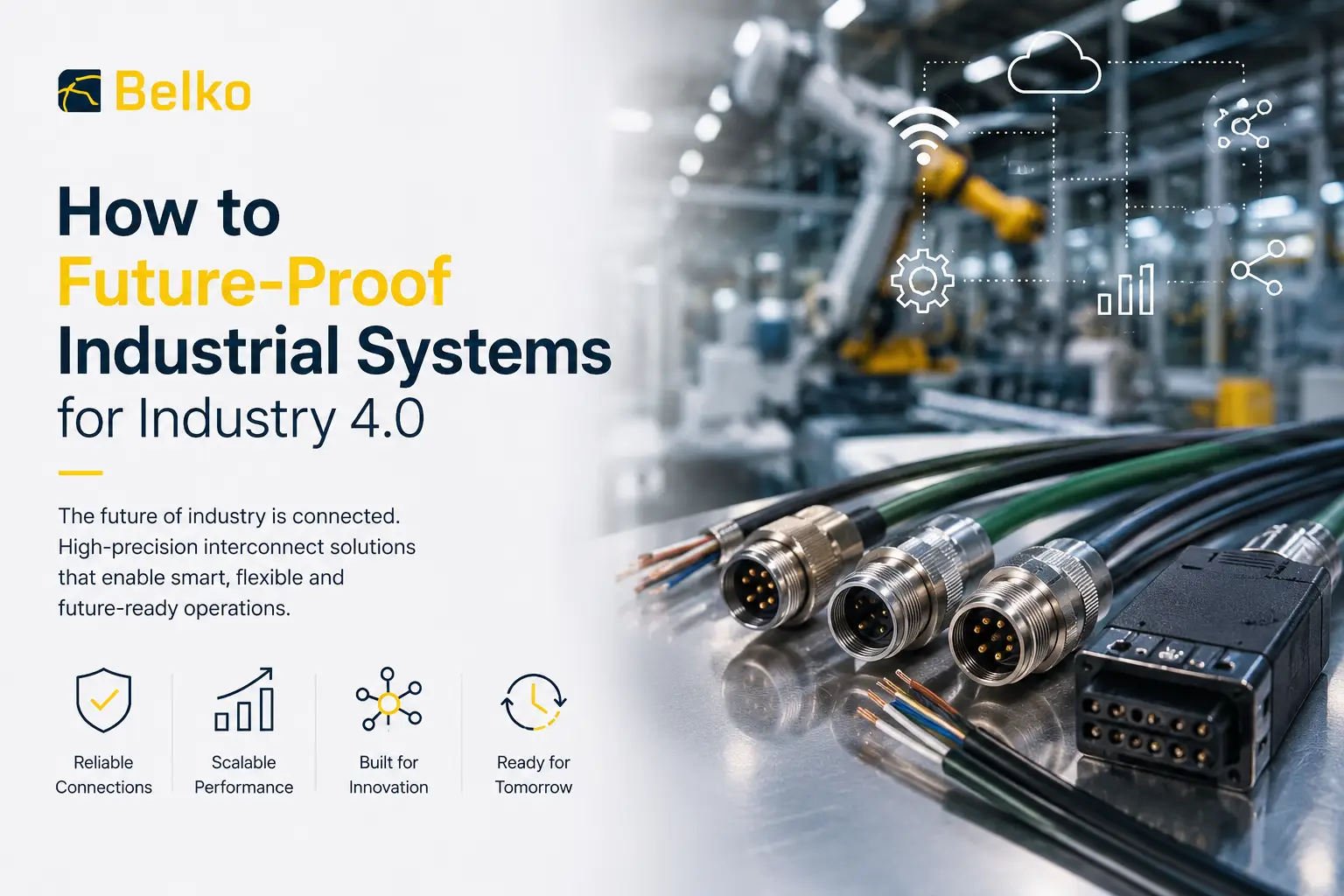
The Question Every Industrial Company Should Be Asking
Imagine installing a brand-new production line today.
The equipment works perfectly. The controls are modern. The software is up to date. Everything appears ready for the future.
But what happens five years from now?
Will the system still support new sensors? Can additional automation be integrated without major redesigns? Will future data requirements overwhelm the existing infrastructure?
These questions are becoming increasingly important as Industry 4.0 continues to reshape manufacturing and industrial operations.
The reality is that future-proofing is no longer about buying the latest machine. It's about building an infrastructure that can adapt to change.
And at the center of that infrastructure lies connectivity.
Why Industry 4.0 Demands a Different Mindset
For decades, industrial systems were designed primarily for stability.
Install the equipment.
Run the process.
Maintain the machinery.
Today, however, industrial environments are evolving much faster.
Companies are implementing:
- predictive maintenance
- IoT devices
- machine monitoring
- real-time analytics
- automated production systems
- digital twins
Every new technology introduces additional communication requirements.
Machines that once operated independently must now exchange information continuously.
This creates an entirely new set of demands for the physical infrastructure behind the system.
The Hidden Challenge Behind Digital Transformation
When people discuss Industry 4.0, they often focus on software.
Dashboards.
Artificial intelligence.
Cloud platforms.
What receives far less attention is the physical layer that allows these technologies to function.
Without reliable connections, data cannot move efficiently between systems.
Without properly designed infrastructure, future upgrades become expensive and complex.
The success of digital transformation often depends on decisions made years before new technologies are introduced.
Think Beyond Today's Requirements
One of the biggest mistakes companies make is designing systems solely around current needs.
A machine may only require a few connections today, but what about tomorrow?
Additional sensors may be added.
Data collection may increase.
Remote monitoring could become mandatory.
Production capacity might expand.
When systems are designed with future scalability in mind, these changes become much easier to implement.
This is where properly selected cable assemblies, modular connectors, and scalable custom cable solutions become valuable investments.
Scalability Starts with Infrastructure
Future-proof systems are designed to grow.
Rather than constantly replacing components, organizations can expand existing infrastructure.
Scalable connectivity solutions offer several advantages:
✓ Easier upgrades
✓ Faster integration of new equipment
✓ Lower future installation costs
✓ Reduced downtime during expansions
✓ Longer overall system lifespan
Companies that invest in scalability today often avoid major infrastructure redesigns tomorrow.
Data Is Becoming More Valuable Than Ever
Industrial operations are generating more information than ever before.
Modern facilities track:
- machine performance
- energy consumption
- maintenance intervals
- production efficiency
- environmental conditions
The ability to collect and transfer this data reliably depends on the quality of the physical connections throughout the system.
Poor connectivity can create data bottlenecks, communication failures, and unreliable reporting.
High-quality cable & wire solutions play a critical role in maintaining accurate information flow across industrial environments.
Environmental Protection Remains Critical
Even the most advanced digital infrastructure must survive real-world conditions.
Factories remain challenging environments.
Dust.
Moisture.
Vibration.
Temperature fluctuations.
As industrial systems become increasingly connected, protecting these connections becomes even more important.
Solutions such as:
- waterproof connectors
- ModICE enclosures
- grommets & sealing rings
- industrial-grade protective accessories
help ensure long-term reliability while supporting future technology integration.
Why Flexibility Is Becoming a Competitive Advantage
The companies adapting most successfully to Industry 4.0 are often not the ones with the newest equipment.
They are the companies with the most flexible infrastructure.
Flexibility allows organizations to:
- implement new technologies faster
- respond to changing customer demands
- improve operational efficiency
- reduce implementation costs
Every future upgrade becomes easier when the underlying connectivity architecture has been designed correctly from the beginning.
The Role of Design Support in Future-Proofing
Future-proofing does not happen by accident.
It starts during planning and design.
Professional design support helps organizations evaluate:
- future expansion possibilities
- environmental requirements
- maintenance accessibility
- scalability needs
- technology integration opportunities
This strategic approach often prevents expensive redesigns later in the project lifecycle.
Future-Proofing Is Not About Predicting the Future
Many companies believe future-proofing means predicting which technologies will dominate the next decade.
In reality, it is much simpler.
Future-proofing means creating systems capable of adapting regardless of what the future brings.
The companies that succeed are not those that guess correctly.
They are the companies that remain flexible.
Reliable connectivity, scalable infrastructure, and intelligent system design provide that flexibility.
Looking Ahead Starts Today
Industry 4.0 is no longer a future concept.
It is already influencing how industrial businesses operate, compete, and grow.
Organizations that invest in robust connectivity infrastructure today place themselves in a stronger position tomorrow.
Belko helps companies prepare for the future through high-quality cable assemblies, durable connectors, scalable custom cable solutions, and expert design support tailored to modern industrial environments.
Interested in preparing your systems for future growth?