





01
Regional Sales Manager
Your first conversation — application, requirements and feasibility
“I have an idea of what I need, but not which part number.”
EN · NL · DE
Interconnective Solutions
Describe your application, your requirement or your challenge. We'll help you find the right component, the right knowledge or the right specialist — even if you don't have a part number yet.
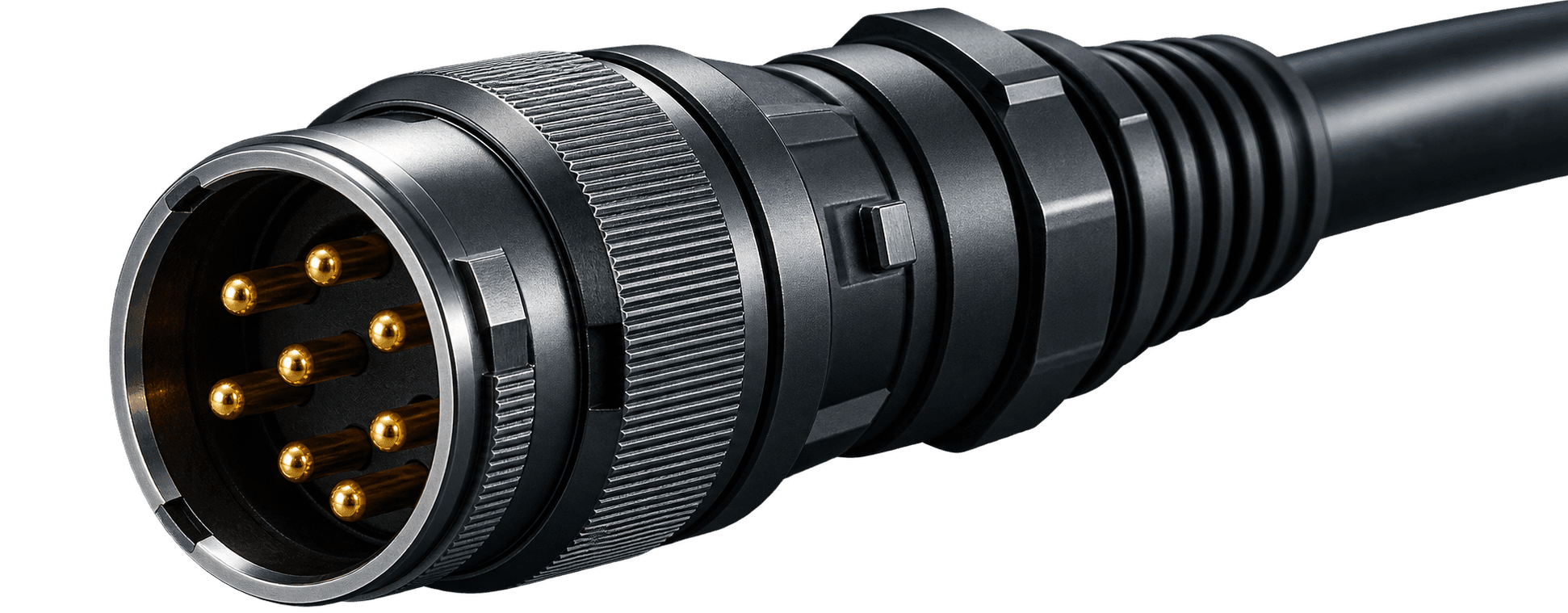
Not sure where to start?
Our product specialists help you personally. You speak directly to a Regional Sales Manager — no ticket, no call centre.
Talk to a product specialist+31 (0)73-6458458Applications
From industrial machinery and mobility to medical technology, advanced electronics and defence — Belko connects demanding applications with the right cables, connectors and custom assemblies.
Explore all applicationsThree ways to start
Not everyone arrives with the same question. One has a part number, the next has a problem, and the third is mostly in a hurry. All three roads end in the same place: a connection that works.
The catalogue
11,453 products
Search by what you already know. Or tell us what the connection has to do, and we narrow it down with you.
Explore the range
The two brands above carry most of the range. These are the families Belko builds around.
Can't find it?
Not every connection starts with a part number.
Tell us what you are trying to connect. A Belko specialist helps you find it — and sources it worldwide if it isn't in the catalogue.
Anatomy
It is a stack of decisions: conductor, insulation, shielding, jacket, sealing, connector. Every layer answers a question, every wrong layer comes back later as interference, wear or downtime — and in the end all of it has to become one connection you can actually plug in.
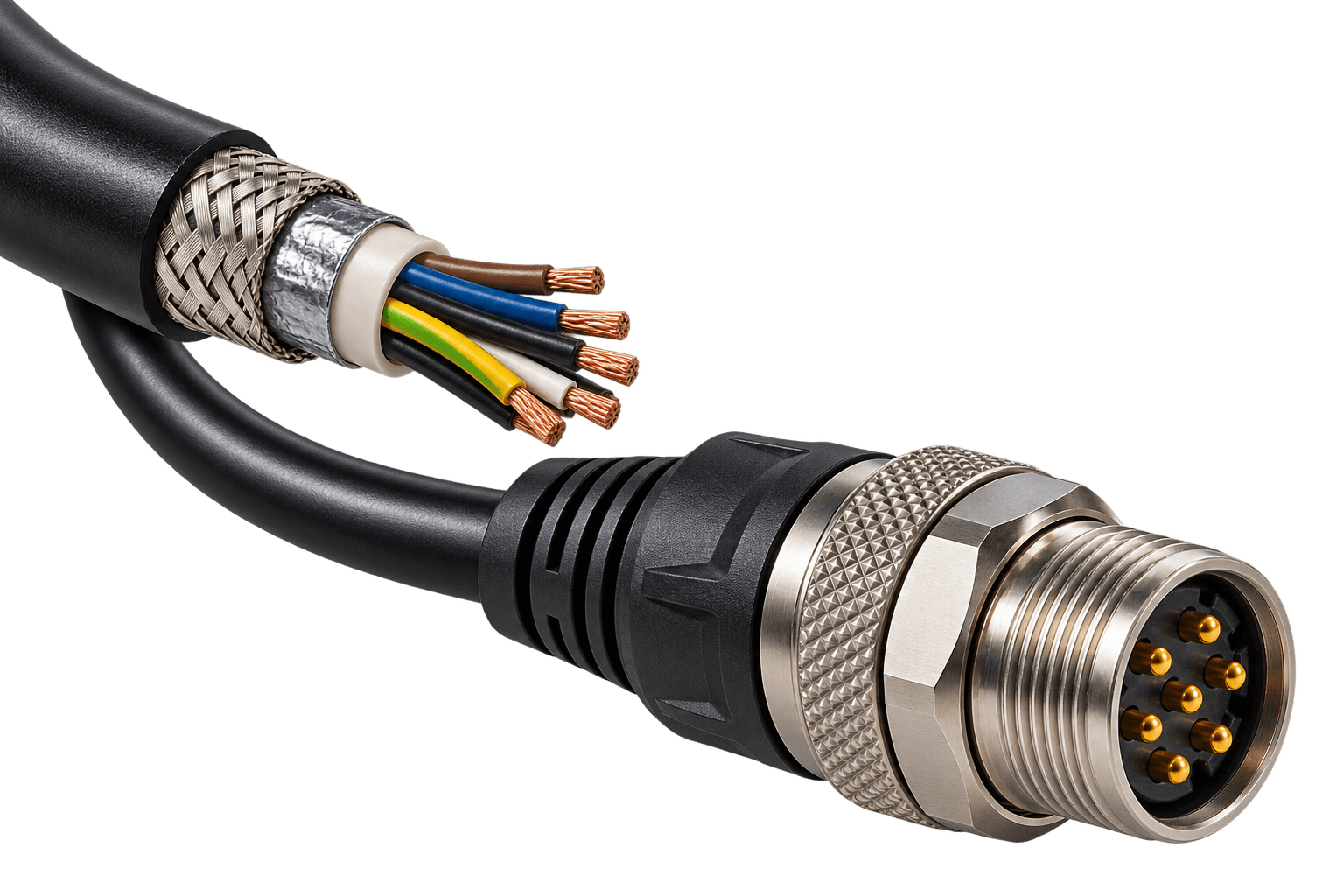
fig. 01 · Illustrative cable assembly anatomy
From the outside in, then into the connector
Ready to define your assembly?
Start with what you know
You will not have every answer up front, and you do not need one. Begin with the part you are sure of — a Belko specialist works through the rest with you and stays responsible for whether it fits your application.
How Belko helps
An interconnect question rarely arrives finished. One visitor is still choosing a component, the next already has a drawing, and the third has a supply problem that started two years ago. Belko works at four stages of the same connection — and you can come in at any of them.
Product selection and application support
“Which component fits this environment?”
Start from the part number if you have one, and from the environment if you don't: temperature, vibration, sealing, EMC, service life. Belko sources components worldwide — if it isn't in the catalogue, we go and find it.
Source · Products · Supply chain management
Design support
“What if nothing that fits exists yet?”
Our engineers think along in the design phase, identify bottlenecks and propose improvements — so you develop more efficiently, reduce cost and limit risk.
Source · Design support · Custom cable design
Cable assemblies
“How is it made reproducible?”
Single wire, multi-conductor cable, ribbon and coax — crimped, soldered, braided, overmoulded and tested on Schleuniger, Komax and GWL equipment.
Start with what you know. Build a project brief and let a Belko specialist complete the technical configuration.
Start your cable assemblySeven short steps. No part number needed, no account, nothing to install.
Source · Cable assemblies
Supply chain and vendor management
“And will it still be available next year?”
We handle everything from the moment of your enquiry: purchasing, material procurement, sourcing and logistics — and, if you want, the administrative and financial tasks.
Source · Supply chain management · Vendor management
Whichever stage you come in at, you get a named contact rather than a ticket — and the stage after it is already covered.
NewBox building & system integration — from components to complete systems.Learn more
Where it has to work
An environment is not a label on a brochure. It is a list of things a connection has to survive — and the list is different in every one of them. Pick the one you work in.
What this environment asks
01 — Automotive & transport
“This connection has to vibrate, run hot and still be identical ten thousand times over.”
Connections that have to be identical thousands of times over and keep doing the same thing for years.
fig. 01
Where the connection sits
Belko Knowledge
Organised by the question you are asking, not by the date we answered it. 17 topics from the work of our engineers.
How to select an industrial connector
A structured way to choose an industrial connector: define the electrical load, the mechanical and environmental conditions at the connector, the termination and the mating regime, then let each requirement rule out connector families. Ratings are only meaningful together with the conditions under which the datasheet states them.
EMC troubleshooting: finding and eliminating interference in industrial connections
A practical method for tracing electromagnetic interference in machines and control cabinets: recognising the symptoms, identifying the source and the coupling path, measuring with simple field tools and fixing the installation — routing, bonding and shield termination at connectors, glands and housings.
BNC, TNC, SMA, N-Type and 7/16 Connectors: Which RF Connector Do You Need?
A practical comparison of the BNC, TNC, SMA, N, 7-16 and 4.3-10 coaxial connector families: impedance variants, typical frequency limits, coupling threads and torques, power class, sealing and cable groups. With a selection sequence, a selection matrix and the mating mistakes that most often degrade RF links.
How to identify and select the right industrial connector by part number
A connector part number is precise only when it is read correctly. This guide explains manufacturer, distributor and GTIN-13 numbers, how to identify a part whose label is missing, and how to judge alternatives and obsolete parts against form, fit and function.
1.6/5.6 coaxial connectors: applications, specifications and selection guide
The 1.6/5.6 connector is a 75 Ω coaxial interface defined in IEC 60169-13 and widely used in telecom transmission equipment. This guide explains the name and the standards behind it, the frequency and return-loss data manufacturers publish, the coupling variants and cable groups, and how 1.6/5.6 compares with BNC, 1.0/2.3 and HD-BNC.
RoHS exemption 6(c): what engineers and buyers need to know
Exemption 6(c) of RoHS Annex III allows copper alloy containing up to 4 % lead by weight, and it sits behind most machined brass and bronze contacts in connectors. This article covers the exact wording after Delegated Directive (EU) 2025/2364, the legal status as of November 2026, the separate REACH duties for lead, what a supplier declaration should state and what changes when a contact moves to a lead-free alloy.
Knowledge is not marketing at Belko, it is the work itself: the same engineers who write these pieces also answer your question.
All Belko KnowledgeThe people
No ticket system and no call centre. Your question reaches the role that knows something about it.
01
Your first conversation — application, requirements and feasibility
“I have an idea of what I need, but not which part number.”
EN · NL · DE
02
Material and component choice, mechanical and electrical requirements
“Will this jacket hold up at 125 °C with daily flexing?”
EN · NL
03
More complex projects, from prototype to series production
“We're going from 20 pieces to 8,000 a year. What changes?”
EN · NL
04
Stock agreements, VMI, call-off orders and security of supply
“I never want to see these eight items on backorder again.”
EN · NL · DE
Contact
You don't have to have it worked out. A description of the application is enough to start.